
Residential complexes need boundary solutions that are practical, neat and suited to the existing property. Palisade fencing is commonly used around complexes because of its durable structure and distinctive appearance. However, the open gaps between the vertical bars may leave certain areas more exposed than residents or property managers would prefer. Palisade weaving offers a way to improve the appearance of suitable fencing while reducing visibility through these gaps.
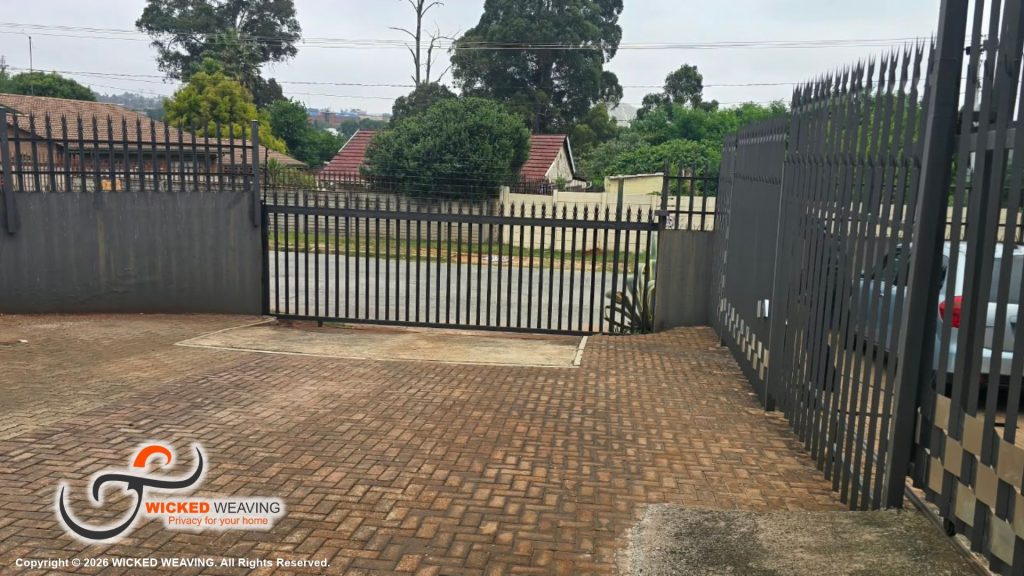
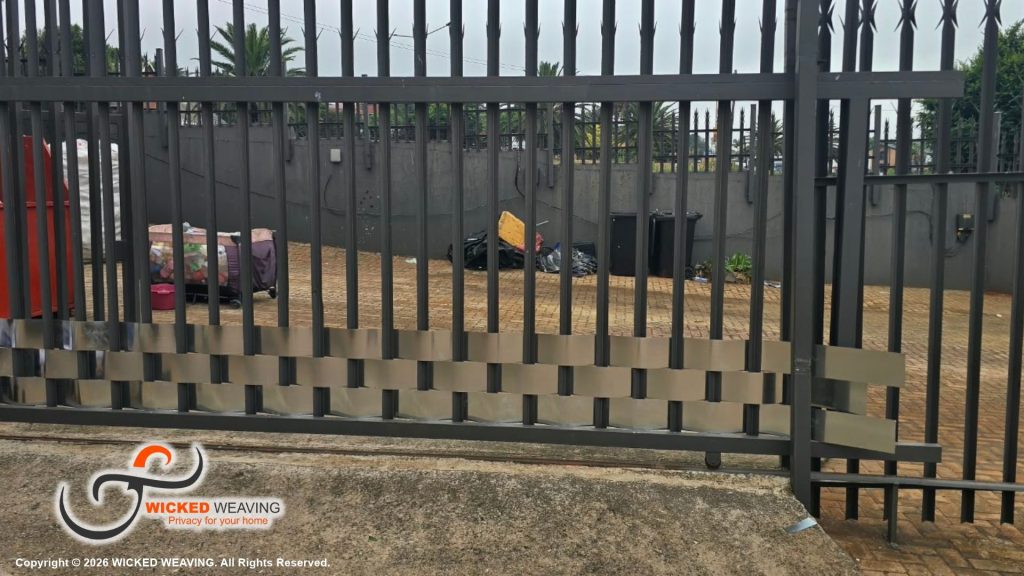
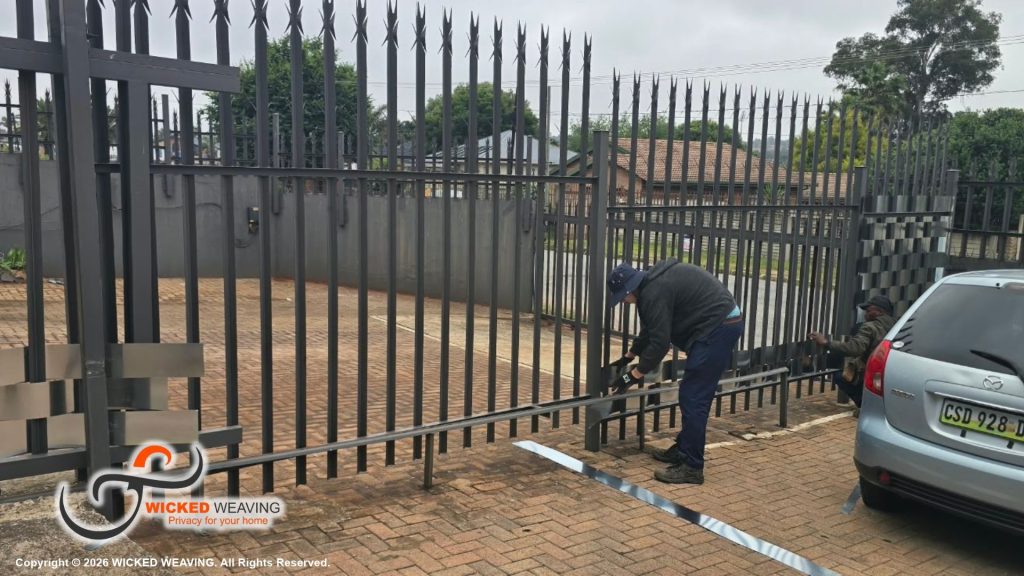
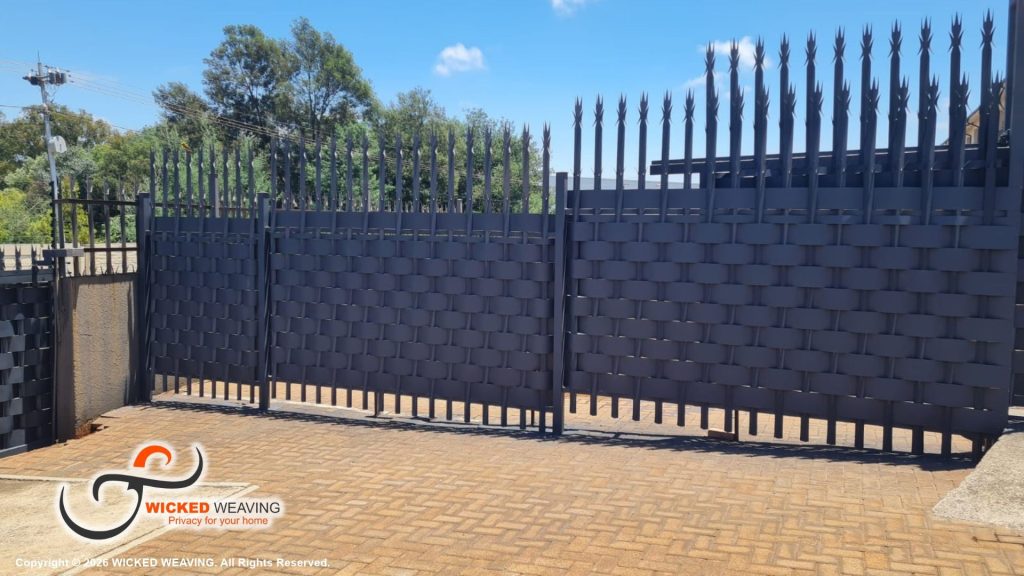
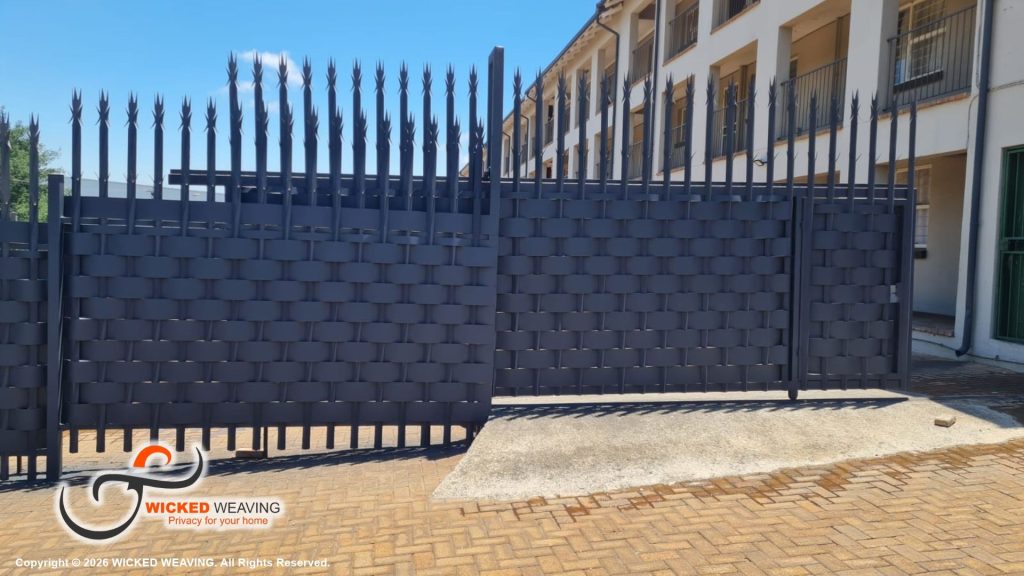
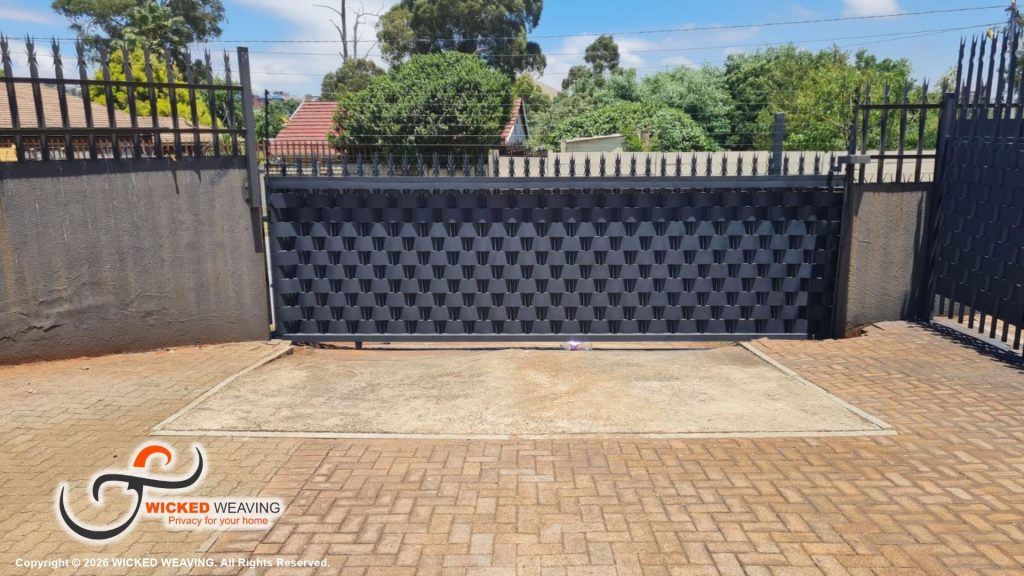
Wicked Weaving recently completed a project involving 20m of charcoal palisade weaving at a complex in Monument Park, Krugersdorp. The installation demonstrates how a relatively straightforward improvement can give an existing palisade boundary a more coordinated appearance without necessarily requiring the entire fence to be replaced.
If you are considering Complex Palisade Weaving for your residential development, this guide looks at some of the benefits, practical considerations and factors to keep in mind when planning an installation.
Why Consider Palisade Weaving for a Residential Complex?
Complexes have different boundary requirements from individual residential properties. Shared spaces, parking areas, gardens, pedestrian entrances and perimeter fencing all contribute to the overall appearance and functionality of the development. Property managers and body corporates often need to balance practical requirements with the appearance of the complex and the preferences of residents.
Palisade weaving provides an option for suitable existing fences where reducing visibility through the gaps is a priority. Metal strips are threaded through the vertical bars of the palisade structure, adding colour and creating a more filled-in appearance while retaining the underlying fence design.
For a complex, this can help create a more consistent look across selected boundary sections. It can also be considered when an existing palisade fence is still in good condition but its open appearance no longer meets the property’s screening preferences.
A Charcoal Finish for a Neat, Modern Appearance
Colour is an important consideration when planning improvements to shared property boundaries. The right finish can complement the existing fencing, exterior walls, gates and surrounding landscaping. Charcoal is a versatile option that offers a clean, understated appearance and works well with many contemporary property styles.
At the Monument Park complex in Krugersdorp, Wicked Weaving installed 20m of charcoal palisade weaving. The colour gives the treated fence sections a coordinated appearance while providing additional screening through the palisade gaps.
When selecting a colour for a complex, it is worth considering the wider development rather than looking at one fence section in isolation. A consistent finish can help tie different boundary areas together, particularly where several sections are being upgraded over time.
What to Consider Before Installing Complex Palisade Weaving
Before arranging an installation, the existing palisade fencing should be assessed to confirm that it is suitable for weaving. The fence needs to be in an appropriate condition, with its structure and bars able to accommodate the additional strips. Damaged, loose or unstable sections should be addressed before work begins.
It is also important to identify exactly which areas require treatment. A complex may have long perimeter fences, smaller sections around parking areas, pedestrian entrances and vehicle gates. Not every section will necessarily require the same approach, so identifying the priority areas can help the body corporate or property manager plan the project effectively.
Consider the following when planning the installation:
Existing fence condition: Check that the palisade structure is stable and suitable for weaving.
Areas to be treated: Measure the fence sections and identify any gates or additional areas that should be included.
Colour selection: Choose a finish that complements the existing boundary and overall appearance of the complex.
Screening expectations: Discuss the level of visibility reduction you want and what can realistically be achieved with the selected fence design.
Access and scheduling: Plan the work around access requirements and the daily activities of residents, visitors and service providers.
Approval requirements: Check whether body corporate, homeowners’ association or estate approval is needed before making changes to shared boundaries.
Working through these details before installation helps everyone understand the scope of the project and what the finished result should achieve.
Improving Existing Fencing Without Replacing the Entire Boundary
Replacing an entire perimeter fence can be a substantial undertaking, particularly at larger residential developments. Where the existing palisade fencing is still structurally suitable, weaving may offer an alternative worth considering.
Rather than removing the existing fence, the installer adds strips through the appropriate gaps in the palisade structure. This changes the appearance of the treated sections and reduces visibility through the spaces between the bars. The underlying palisade fence remains in place.
The final result depends on the fence design, strip arrangement and viewing angle. Palisade weaving should not automatically be regarded as a completely opaque barrier, so it is important to discuss the expected screening level before proceeding.
For complexes with several boundary sections, the work can also be planned in stages if necessary. This allows property managers to prioritise particular areas and consider further improvements as budgets and requirements allow.
Maintenance and Long-Term Considerations
Like other boundary improvements, palisade weaving should be checked periodically. Routine inspections can help identify loose or damaged strips, changes to the condition of the original fencing or other issues that may need attention.
Property managers should also consider the surrounding fence structure when arranging maintenance. Weaving does not replace the need to look after the original palisade fencing, posts, fixings and gates. Keeping the entire boundary in suitable condition helps maintain the appearance and functionality of the installation.
Ask your installer for maintenance recommendations specific to the materials and fence design used on your property.
Complex Palisade Weaving in Krugersdorp
The 20m charcoal palisade weaving installation at the Monument Park complex in Krugersdorp is an example of how selected fence sections can be updated to create a neater, more coordinated boundary. By working with suitable existing palisade fencing, complexes can explore practical improvements without automatically committing to a complete fence replacement.
Every property is different, however. The condition of the existing fencing, the areas requiring screening, colour preferences and installation requirements should all be considered before choosing a solution.
Contact Wicked Weaving for Complex Palisade Weaving
Whether you manage a residential complex, oversee a body corporate or are planning improvements to a shared property boundary, Wicked Weaving can help you explore suitable palisade weaving options.
From charcoal and black finishes to other available colour options, we offer palisade weaving solutions for suitable fencing and gates. Contact our team to discuss your requirements and arrange a quotation for your property.
Get in touch with Wicked Weaving today for a FREE QUOTE on Complex Palisade Weaving.
Phone: 064 100 6607 | 084 830 5004
Email: info@wickedweaving.co.za
Website: https://www.wickedweaving.co.za/
Facebook: https://www.facebook.com/wickedweavingza/
